Brazilian Portuguese Idioms: Meanings, Examples, and How to Recognize Them
Learn how Brazilian Portuguese idioms work as chunks, why literal translation fails, and how to check context, tone, variants, and safe use.
 Samuel Virgo
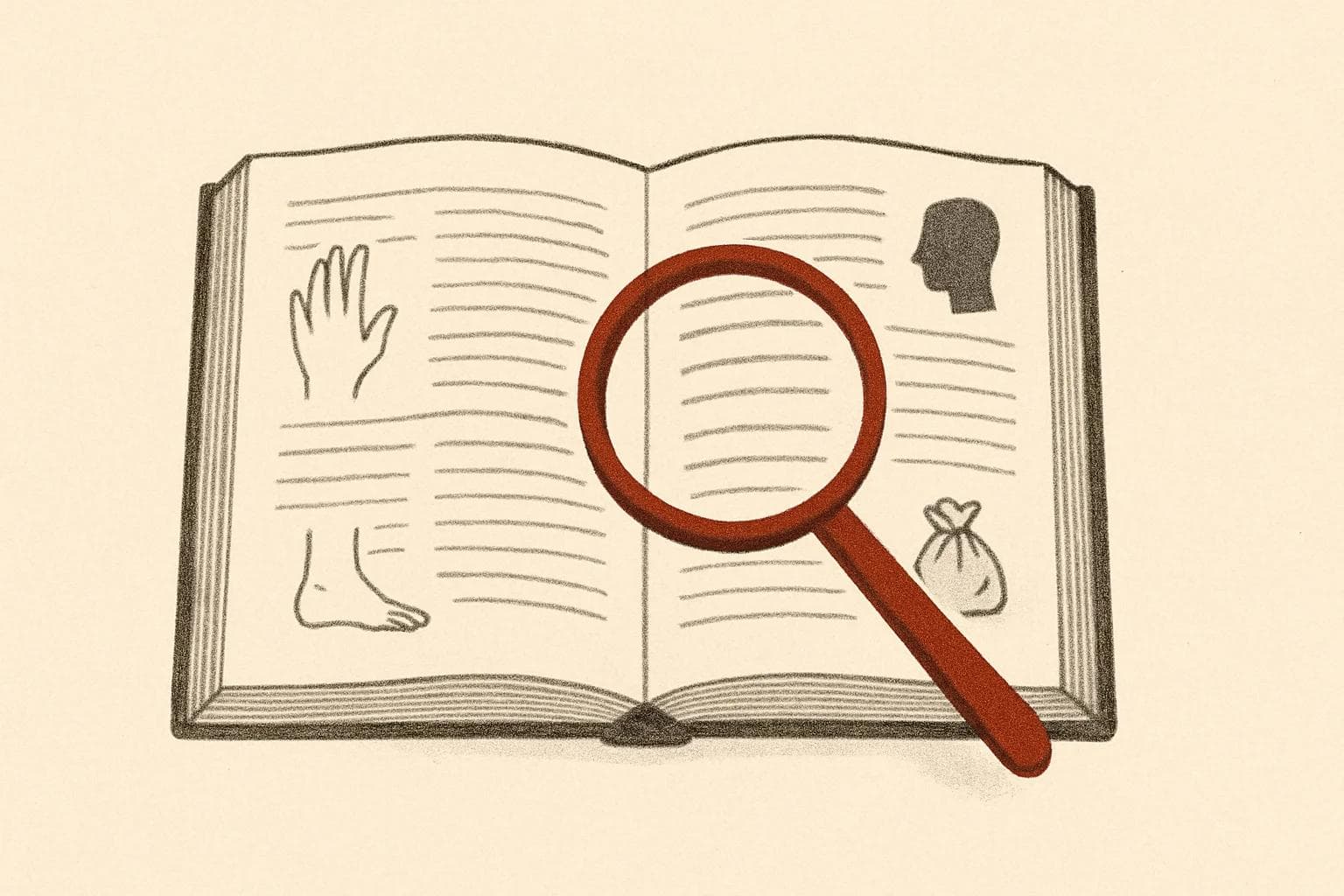
Brazilian Portuguese idioms can make a sentence difficult even when you know every word in it.
You might understand chutar and balde, for example, but still have no idea why someone is apparently “kicking the bucket” when the conversation is actually about giving up.
That's because an idiom works as a chunk. Its meaning belongs to the whole expression, not simply to the words inside it.
This guide covers useful Brazilian Portuguese idioms by meaning, literal image and example, then shows you how to recognise them when they appear in real books, conversations, messages and shows.
The most important rule is:
Learn idioms first as things to understand, not things you have to start saying.
Some are everyday and easy to use. Others are informal, regional, old-fashioned, dramatic or simply much more natural coming from a Brazilian speaker than from a learner.
1. Common Brazilian Portuguese idioms, meanings, and examples
Here are some useful idioms worth knowing for Brazilian Portuguese.
This isn't meant to be a definitive ranking of the “top 100” idioms. Frequency varies by genre, region and situation. Instead, these are useful examples that illustrate the kinds of expressions you're likely to encounter.
| Idiom | Literal image | Meaning | Example |
|---|---|---|---|
| chutar o balde | kick the bucket | give up / lose patience / abandon restraint | Depois disso, ele chutou o balde. — After that, he gave up / lost it. |
| dar uma mão | give a hand | help | Você pode me dar uma mão? — Can you give me a hand? |
| dar a volta por cima | go around and come out on top | recover from a setback | Ela deu a volta por cima. — She bounced back. |
| cair a ficha | the penny drops | finally understand | Agora caiu a ficha. — Now I get it. |
| ficar com o pé atrás | keep your foot behind | be suspicious / cautious | Fiquei com o pé atrás. — I became suspicious. |
| estar com a cabeça nas nuvens | have your head in the clouds | be distracted / dreamy | Ele vive com a cabeça nas nuvens. — He's always daydreaming. |
| custar os olhos da cara | cost the eyes of the face | be very expensive | Esse carro custa os olhos da cara. — That car costs a fortune. |
| engolir sapo | swallow a frog | put up with something unpleasant | Tive que engolir sapo. — I had to put up with it. |
| encher linguiça | stuff sausage | pad something with unnecessary material | Ele ficou enchendo linguiça. — He kept rambling / padding it out. |
| dormir no ponto | sleep at the right spot | miss an opportunity | Você dormiu no ponto. — You missed your chance. |
| botar a mão na massa | put your hand in the dough | get to work | Vamos botar a mão na massa. — Let's get to work. |
| fazer tempestade em copo d'água | make a storm in a glass of water | overreact | Você está fazendo tempestade em copo d'água. — You're making a mountain out of a molehill. |
| colocar o carro na frente dos bois | put the cart before the oxen | do things in the wrong order | Não vamos colocar o carro na frente dos bois. — Let's not get ahead of ourselves. |
| dar o braço a torcer | give your arm to be twisted | admit you were wrong / concede | Ele deu o braço a torcer. — He admitted he was wrong. |
| comprar gato por lebre | buy a cat instead of a hare | be deceived / get something worse than expected | Comprei gato por lebre. — I got ripped off. |
| dar com a língua nos dentes | hit your tongue on your teeth | reveal a secret | Ele deu com a língua nos dentes. — He let the secret slip. |
| ficar a ver navios | be left watching ships | be left empty-handed / disappointed | No fim, fiquei a ver navios. — In the end, I got nothing. |
| quebrar um galho | break a branch | do someone a favor / help out | Você pode quebrar um galho? — Can you help me out? |
These meanings and examples reflect established Brazilian Portuguese idiomatic usage; reference lists such as Brasil Escola's guide to expressões idiomáticas provide a broader inventory, while research on Brazilian Portuguese phraseology shows why these expressions need to be treated as conventional units rather than ordinary word combinations.
For individual expressions, the Brazilian Portuguese expressions glossary is a better place to go deeper into variants, examples and usage.
2. What is a Brazilian Portuguese idiom?
A Brazilian Portuguese idiom is a conventional multiword expression whose meaning cannot always be safely constructed from the literal meanings of its individual words.
In other words, the problem isn't that the words are difficult.
The problem is that the phrase works as a unit.
If you know every word but the sentence still makes no sense, you may be looking at an idiom.
For example:
Ele chutou o balde.
You might know:
- ele = he
- chutou = kicked
- o = the
- balde = bucket
But the sentence probably isn't about someone kicking an actual bucket.
Chutar o balde is an established expression whose meaning is closer to giving up, abandoning restraint or losing patience.
Research on Brazilian Portuguese idioms describes this in terms of semantic transparency and opacity: sometimes the words point fairly clearly toward the meaning, while in other cases the expression works much more like a single block.
Idioms, expressions and slang aren't exactly the same
Expression is the broader category. Not every fixed expression is an idiom. A greeting or conversational formula can be useful Portuguese without having an idiomatic meaning.
Slang is more about register and social use. An idiom can also be slangy or informal, but the two concepts aren't interchangeable.
See our guide to Brazilian Portuguese slang if the main problem is informal language.
Sayings and proverbs overlap with idioms too, but they usually carry a broader lesson or cultural message.
See Brazilian Portuguese sayings for those.
A useful learner test is:
Would translating the phrase word by word send me toward the wrong meaning?
If yes, treat the whole phrase as a possible idiom.
3. Why literal translations of idioms go wrong
Literal translation fails because an idiom is a meaning unit, not simply a collection of words.
You can know every word and still misunderstand the sentence.
Consider:
Esse carro custa os olhos da cara.
Literally:
“This car costs the eyes of the face.”
The actual meaning is:
The car is extremely expensive.
The image can still be useful. Once you know the idiom, imagining the absurd literal scene can help you remember it.
The mistake is using the image as the answer.
Literal images are memory hooks, not dictionaries
For many idioms, the literal image is deliberately vivid:
- engolir sapo — swallow a frog
- encher linguiça — stuff sausage
- botar a mão na massa — put your hand in the dough
- ficar com o pé atrás — keep your foot behind
- dar com a língua nos dentes — hit your tongue on your teeth
Those images are useful because they're memorable.
But you need to learn the expression first.
Research on idiom processing supports the importance of factors such as transparency and how easily an expression can be broken into meaningful parts.
Machine translation research has also found that idiomatic material can be substantially more difficult for translation systems than ordinary text. One English/Brazilian-Portuguese experiment found much lower BLEU scores for corpora containing idioms. That doesn't tell us how often human learners misunderstand them, but it illustrates the same basic problem: literal wording isn't enough.
4. Literal vs. idiomatic meaning: how to tell the difference
There isn't a foolproof test.
But there is a very useful habit:
Does the literal scene make sense here?
Suppose you read:
Depois da discussão, ele chutou o balde.
If you imagine an actual bucket, something has gone wrong.
The paragraph is about a person's reaction to an argument.
That is your signal to check the whole phrase.
Ask yourself:
Does the literal scene fit the paragraph?
If the sentence is about emotions, decisions, money or relationships but suddenly contains a strange physical action, investigate.
Is the sentence expressing an attitude or reaction?
Idioms often appear when someone is:
- complaining
- praising
- exaggerating
- judging
- reacting
- refusing
- admitting something
Does the next sentence give you a clue?
Sometimes the meaning becomes obvious from what happens immediately afterward.
Learners in research on Portuguese L2 idiom comprehension used nearby textual clues, broader context and rereading when interpreting idioms in context.
Do the same words keep appearing together?
If a verb and noun repeatedly travel together, look up the whole chunk.
Could it actually be literal?
This one matters.
Not every strange-looking phrase is an idiom.
For example:
Ele levantou a mão.
means exactly what it appears to mean:
He raised his hand.
Context decides.
A useful learner question is:
Essa frase faz sentido ao pé da letra aqui?
“Does this sentence make sense literally here?”
If not, check the whole expression.
5. How to use meanings, examples, and tone labels
Don't learn an idiom as:
Portuguese phrase = English translation
That's too little information.
Treat it as a small usage packet.
| Part | What it tells you |
|---|---|
| Idiom | The chunk to recognise |
| Literal image | A memory hook |
| Real meaning | What it means in context |
| Portuguese example | How it behaves in a sentence |
| Natural English meaning | How you'd actually understand the sentence |
| Tone / register | Neutral, informal, slangy, rude, regional, etc. |
| Variants | Forms you may encounter |
| Use note | Recognise first or safe to use? |
For example:
Chutar o balde
Literal image: kick the bucket
Meaning: give up, abandon restraint, or lose patience
Example:
Depois de meses tentando, ele chutou o balde.
After months of trying, he gave up.
Tone: informal
Variant: you may encounter conjugated forms such as chutou o balde or chuta o balde rather than only the infinitive.
Use: understand it first; active use is safest once you've seen how Brazilians use it naturally.
The Michaelis dictionary is useful for checking individual usage labels, but labels such as “colloquial” or “slang” should be treated as information about that particular expression, not as a universal rule for all idioms.
The CEFR also treats idiomatic and colloquial language as part of broader lexical, register and sociolinguistic competence. In other words, knowing an idiom involves more than knowing its translation.
6. Brazilian Portuguese body-part idioms
Body parts are one of the easiest ways to spot idiomatic language.
Words such as:
- mão — hand
- pé — foot
- cabeça — head
- braço — arm
- língua — tongue
- olho — eye
- cara — face
often appear inside fixed expressions.
Here are some useful examples.
| Idiom | Meaning |
|---|---|
| dar uma mão | help |
| botar a mão na massa | get to work |
| dar o braço a torcer | admit you're wrong / concede |
| dar com a língua nos dentes | reveal a secret |
| ficar com o pé atrás | be suspicious / cautious |
| estar com a cabeça nas nuvens | be distracted / dreamy |
| custar os olhos da cara | be extremely expensive |
| cara de pau | shameless / brazen person |
| meter o dedo na ferida | touch on a sensitive issue |
Body-part expressions form a genuine phraseological pattern. One corpus study, for example, identified 93 phraseological units referring to 26 body parts in the political Portuguese material it analysed. That figure shouldn't be read as a list of the most common everyday Brazilian idioms, but it does illustrate how productive this type of imagery can be.
Research comparing body-based idioms in Brazilian and European Portuguese also suggests that the two varieties can differ in repertoire, frequency and pragmatic use. So always check an expression as Brazilian Portuguese, rather than assuming a phrase works identically across Portuguese varieties.
The useful habit is:
The body part helps you notice the chunk. It doesn't tell you the meaning.
7. Brazilian Portuguese idioms with colors, food, and everyday objects
Brazilian Portuguese idioms also make use of things you can easily picture:
- food
- animals
- colors
- household objects
- parts of the body
- everyday actions
These images are useful because they're memorable.
But again:
The image is not a decoding rule.
For example:
Encher linguiça
Literally:
stuff sausage
In use:
encher linguiça = fill space with unnecessary material, ramble or pad something out.
Example:
Ele não tinha nada novo para dizer e ficou enchendo linguiça.
He had nothing new to say and just kept padding things out.
Fazer uma vaquinha
Literally:
make a little cow
In Brazilian Portuguese, fazer uma vaquinha means to pool money together for something.
Vamos fazer uma vaquinha para comprar o presente.
Let's all chip in to buy the present.
Comprar gato por lebre
Literally:
buy a cat for a hare
Meaning:
get something different or worse than what you thought you were buying; be deceived.
Comprei gato por lebre.
I got ripped off / I didn't get what I thought I was buying.
Fazer tempestade em copo d'água
Literally:
make a storm in a glass of water
Meaning:
overreact to something small.
Não faz tempestade em copo d'água.
Don't make such a big deal out of it.
Color, food and object imagery can be useful ways of organising expressions, and Brazilian Portuguese teaching resources use these kinds of recurring images as teaching aids. But the image should help you remember an idiom you already understand, not substitute for checking its meaning.
8. Brazilian Portuguese idioms with common verbs and actions
Verb-based idioms are particularly easy to miss.
You already know the verb, so your brain assumes the rest of the sentence must be literal.
Look at:
cair a ficha
You know:
- cair = fall
- ficha = token / chip / card, depending on context
But:
Caiu a ficha.
usually means:
It finally clicked.
The same thing happens with familiar verbs such as:
- dar
- cair
- ficar
- fazer
- botar
- chutar
- quebrar
Some useful examples:
| Idiom | Meaning |
|---|---|
| cair a ficha | finally understand |
| dar a volta por cima | recover from a setback |
| dar o braço a torcer | admit defeat / concede |
| dar com a língua nos dentes | reveal a secret |
| dar uma mão | help |
| ficar com o pé atrás | be suspicious |
| fazer tempestade em copo d'água | overreact |
| botar a mão na massa | get to work |
| chutar o balde | give up / lose patience |
| quebrar um galho | help someone out |
A study of Brazilian Portuguese expressions built around cair illustrates why a common base verb can be a useful recognition aid. But you shouldn't assume that every expression containing a common verb is automatically idiomatic.
The better question is:
Is this familiar verb part of a recurring phrase whose literal meaning doesn't fit the context?
9. How Brazilian Portuguese idioms change in real sentences
One reason idioms are difficult is that you rarely meet them in exactly the form shown in a dictionary.
The core expression may stay recognisable while the grammar changes around it.
For example:
chutar o balde
might appear as:
Ele chutou o balde.
or:
Ela não vai chutar o balde.
The verb changes, but the idiomatic expression remains.
Brazilian Portuguese idioms exist on a continuum of fixity. Some are highly fixed, while others tolerate certain grammatical changes without losing their figurative meaning.
Changes to watch for
| What can change | What to do |
|---|---|
| Verb form | Look for the same core expression with a conjugated verb |
| Tense | Don't only search for the infinitive |
| Negation | não may appear around the expression |
| Pronouns | Pronouns can change with the sentence |
| Gender/number | Nearby words may agree grammatically |
| Small insertions | Natural speech can place extra words around a phrase |
Take:
chutar o balde
You might encounter:
chutou o balde
rather than the dictionary form.
Wiktionary, for example, records conjugated forms such as chuta and chutou for the expression.
But don't take that as permission to freely modify every idiom.
Some expressions tolerate grammatical changes.
Others depend heavily on fixed wording.
When the form looks unfamiliar, ask:
- Can I still see the core chunk?
- Does the literal scene make sense?
- Does the surrounding context support the figurative meaning?
Reading real sentences is how you learn what happens to an idiom when grammar gets involved.
10. Which Brazilian Portuguese idioms should you understand first and use later?
Many idioms are much more useful to recognise than to actively use.
That's not a problem.
If you understand an idiom in a Brazilian book, message, TV show or conversation, you've learned something valuable even if you never say the phrase yourself.
Why?
Because idioms can carry information about:
- register
- social relationship
- emotion
- irony
- generation
- region
- genre
- cultural context
So use a simple progression.
| What you know | Treat it as |
|---|---|
| You've seen it once and understood the sentence | Recognise it |
| You've seen it several times | Understand it confidently |
| You've checked its tone and seen good examples | Consider using it casually |
| You've heard Brazilians use it naturally in situations like yours | Safer to use actively |
| You're unsure about its tone or region | Keep it passive |
Before using an idiom yourself, check:
1. Have you seen it more than once?
One example isn't much evidence.
2. Do you know its register?
Is it:
- neutral?
- informal?
- slangy?
- rude?
- affectionate?
- regional?
- old-fashioned?
3. Have you seen it in a situation like yours?
Knowing what an idiom means isn't the same as knowing when to say it.
4. Is this a low-risk situation?
A casual conversation with a patient Brazilian is a much safer place to experiment than a job interview or formal email.
5. Can someone reliable confirm it?
A Brazilian speaker, teacher or good usage reference can save you from sounding much stranger than you intended.
A useful learner sentence is:
Ainda não sei usar essa expressão naturalmente.
“I still don't know how to use this expression naturally.”
That's a perfectly legitimate stage of learning.
The mini-rule is:
Understanding an idiom isn't the same as knowing how to use it naturally.
11. How to understand a new Portuguese idiom in context
When you encounter a strange phrase, don't translate the individual words harder and harder.
Use this workflow.
1. Pause when the literal scene feels wrong
Your first clue is often a mismatch.
The words create a physical image, but the paragraph is actually about:
- emotions
- money
- relationships
- success
- failure
- arguments
- someone's attitude
That's when you should suspect an idiom.
Ask:
Essa frase faz sentido ao pé da letra aqui?
“Does this sentence make sense literally here?”
If not, stop treating the words as separate vocabulary items.
2. Read the surrounding sentence
Look before and after the expression.
Ask:
- What is happening?
- What emotion is present?
- Is someone judging something?
- Is someone exaggerating?
- Does the next sentence explain the result?
- Would the literal interpretation be absurd?
Context can give you a strong hypothesis, but it isn't guaranteed to give you the right answer.
Research on Portuguese L2 learners supports using textual clues, broader context and rereading when working out idioms.
Think:
Context = hypothesis, not proof.
3. Look up the whole chunk
This is one of the biggest differences between learning ordinary vocabulary and learning idioms.
Don't search:
chutar
then:
balde
Search:
chutar o balde
The meaning belongs to the phrase.
If the verb is conjugated, try the infinitive too:
chutou o balde → chutar o balde
The Brazilian Portuguese expressions glossary is useful for this kind of lookup.
4. Save the sentence, not just the translation
A weak vocabulary note looks like:
chutar o balde = give up
A much better one is:
Depois de meses tentando, ele chutou o balde.
He gave up after months of trying.
Informal expression.
Now you've remembered:
- the idiom
- the grammar
- the context
- the tone
- how it actually appears in Portuguese
That matters because idioms are context-dependent.
5. Check whether it can change
If you later see:
ela chutou o balde
you want to recognise it immediately.
You don't want to think:
“I've never learned this phrase.”
You want to think:
“Ah — that's chutar o balde, but conjugated.”
That is one of the reasons real examples are so valuable.
6. Check the tone before using it
Finally, separate:
I understand this.
from:
I would naturally say this.
Those are different achievements.
If you've only encountered an idiom once, keep it passive.
If you've heard it repeatedly from Brazilian speakers and understand the setting, it may eventually become part of your active vocabulary.
Learn Brazilian Portuguese idioms from real context
Idioms are one of the clearest examples of why learning Portuguese word by word eventually stops being enough.
You can know:
chutar = kick
balde = bucket
and still not understand:
chutar o balde
The solution isn't to memorise thousands of English translations.
It's to start seeing Portuguese as chunks.
When you encounter an expression:
Notice the chunk → check the context → look up the whole expression → save the sentence → see it again.
That's how an idiom moves from:
“What on earth does that mean?”
to:
“Oh, I know what they're saying.”
The Verbeto Reader is designed around that kind of reading. Tap a word or expression in a real Brazilian text and keep the sentence around it, rather than separating the vocabulary from the context that gave it meaning.
Read → understand → keep going.
Learn Portuguese by using it.
New reading guides, useful Portuguese resources, and notes on learning Brazilian Portuguese — delivered occasionally.
Related articles
Brazilian Sayings Explained: Popular Ditados, What They Mean, and When to Use Them
Learn how Brazilian sayings work in context: literal images, real meanings, tone, variants, and when to recognize a ditado instead of using it.
Samuel Virgo10 min read
Brazilian Portuguese Slang for Learners: Understand Real Chats, Shows and Songs
Decode Brazilian Portuguese slang in chats, shows and songs with learner-safe meanings, texting shortcuts and cues for what not to use yourself yet.
Samuel Virgo11 min read
Brazilian Portuguese Love Phrases: What to Say, What They Mean, and What to Avoid
Use Brazilian Portuguese love phrases with confidence: compare te amo, meu amor, lindo, fofo, and more by tone, intensity, context, and risk.
Samuel Virgo9 min read