Brazilian Sayings Explained: Popular Ditados, What They Mean, and When to Use Them
Learn how Brazilian sayings work in context: literal images, real meanings, tone, variants, and when to recognize a ditado instead of using it.
 Samuel Virgo
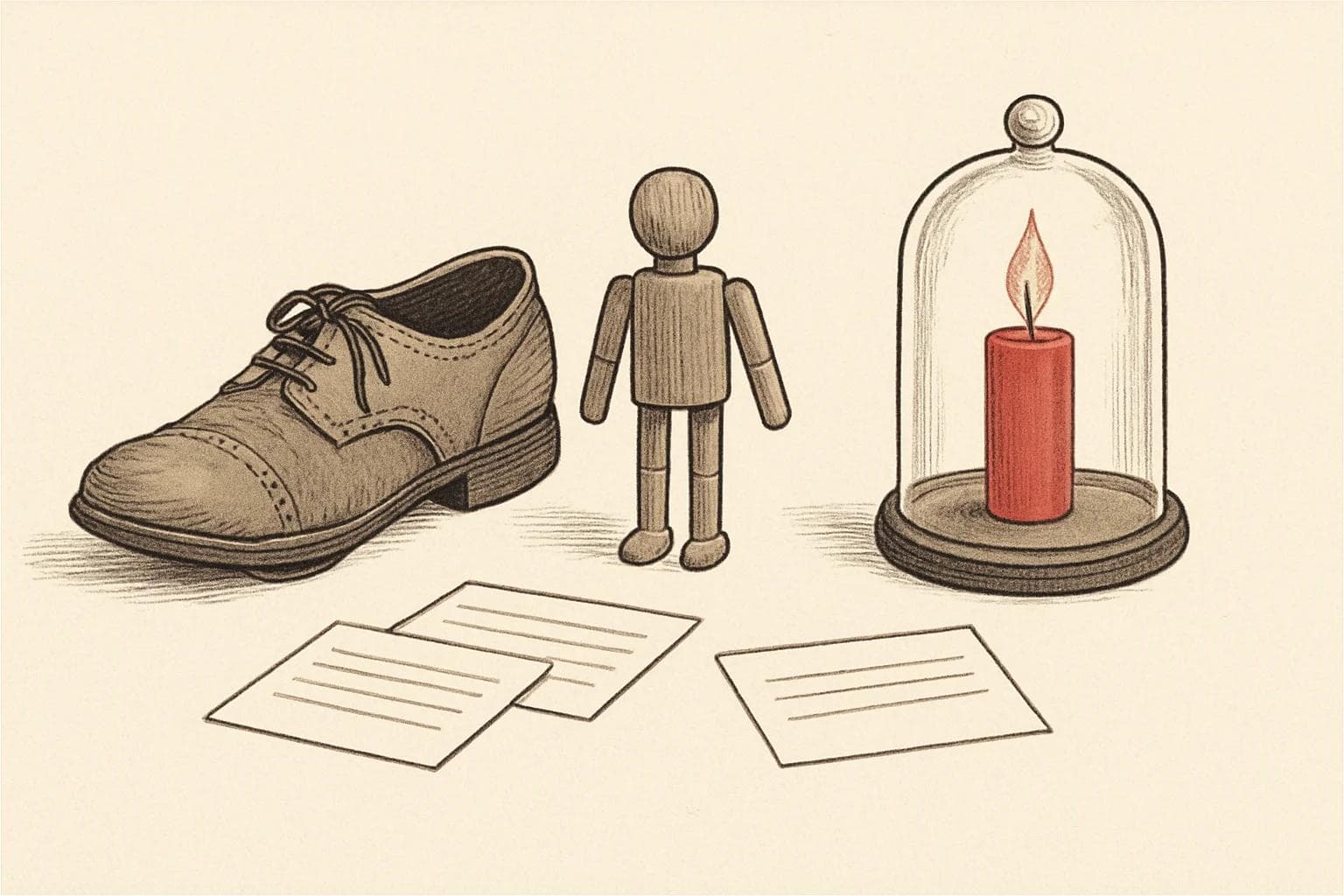
Brazilian sayings — ditados populares — can stop you in the middle of a book or conversation even when you know every individual word.
The literal image may be funny, strange, or completely confusing. The real meaning comes from the situation: someone may be giving advice, warning you, teasing you, criticizing a decision, or simply accepting the way things are.
And understanding a saying doesn't necessarily mean you should start using it yourself.
This guide explains common Brazilian sayings with their literal images, real meanings, English equivalents where useful, and notes on tone and usage. The goal is simple: know what Brazilians mean when they use a ditado, and know when it's better to recognize one than repeat it.
Quick guide to Brazilian sayings, meanings, and use labels
A Brazilian saying can be memorable because of its literal image, but the image isn't necessarily the message.
For each saying below, it helps to separate:
- Portuguese wording — the form you're likely to encounter.
- Literal translation — the word-for-word image.
- Real meaning — what the speaker actually means.
- English equivalent — a close proverb or plain-English explanation, when useful.
- Situation — when the saying might appear.
- Tone — how it can sound in context.
- Use — whether it's mainly worth recognizing or is reasonably safe to use yourself.
That distinction matters because figurative language isn't decoded from dictionary meanings alone. Context and how transparent an expression feels can affect how second-language learners interpret it.
An English equivalent is also only a shortcut. Sometimes English has a proverb that performs roughly the same job. Sometimes a plain explanation is more accurate than forcing a one-to-one translation.
Learner resources such as PortuguesePod101 similarly separate the Portuguese wording, literal translation, English equivalent, and usage information. The important extra question here is: “Should I actually say this?”
What is a ditado popular in Brazilian Portuguese?
A ditado popular is a short, familiar saying that expresses a lesson, piece of advice, warning, observation, or judgment about life and human behavior.
You can think of ditado popular, provérbio, and Brazilian saying as closely related terms. They aren't always perfect academic synonyms, but the distinction isn't especially important for learners.
What matters is the function.
A ditado isn't simply a colorful expression. It often tells you something about:
- patience
- consequences
- money
- appearances
- persistence
- luck
- relationships
- human behavior
For example:
A pressa é inimiga da perfeição.
Literally: “Haste is the enemy of perfection.”
The point isn't really to discuss haste or perfection. It's advice: don't rush if rushing is going to make the result worse.
This is also what separates many ditados from ordinary idioms.
An idiom such as chutar o balde (“to kick the bucket”) works as a figurative phrase. A ditado such as A pressa é inimiga da perfeição makes a broader observation or gives a lesson.
The categories overlap, but a useful rule is:
- Ditado popular: a saying with a lesson or observation about life or behavior.
- Idiom: a conventional figurative phrase whose meaning isn't simply the sum of its words.
- Slang: informal vocabulary or expressions associated with casual speech.
- Expression: a broader category covering culturally important fixed phrases.
For individual expressions such as saudade, nossa, or valeu, see the Brazilian Portuguese expressions glossary.
For figurative phrases that work more like idioms, see our guide to Brazilian Portuguese idioms.
For informal vocabulary and casual speech, see Brazilian Portuguese slang.
Why literal translations of Brazilian sayings are useful but not enough
A literal translation shows you the image inside a Brazilian saying.
It doesn't necessarily tell you what the speaker means.
That's actually useful for language learners. Strange images are memorable, and seeing how the Portuguese is constructed can make a saying easier to recognize later.
But there are three different layers:
| Layer | What it gives you | What it doesn't give you |
|---|---|---|
| Literal translation | The word-by-word image | The intended message |
| Real meaning | The lesson, warning, joke, or criticism | Every nuance of the Portuguese |
| English equivalent | A familiar way to understand the function | A guaranteed one-to-one match |
For example:
O barato sai caro.
Literally: “The cheap thing comes out expensive.”
The real meaning is closer to:
Trying to save money can cost you more in the end.
An English speaker might think of “you get what you pay for,” although the two sayings aren't identical.
So use literal translations as memory aids, not as definitions.
The literal image helps you remember the saying.
The context tells you what it means.
Brazilian sayings with meanings, literal translations, and English equivalents
Here are some of the most useful Brazilian sayings for learners to recognize.
| Brazilian saying | Literal meaning | Real meaning | English approximation |
|---|---|---|---|
| A pressa é inimiga da perfeição. | Haste is the enemy of perfection. | Rushing can lead to mistakes. | Haste makes waste. |
| Água mole em pedra dura, tanto bate até que fura. | Soft water on hard stone keeps hitting until it makes a hole. | Persistence can overcome resistance. | Persistence pays off. |
| O barato sai caro. | The cheap thing comes out expensive. | A cheap option can end up costing more. | You get what you pay for. |
| Quem não tem cão caça com gato. | Whoever doesn't have a dog hunts with a cat. | Make do with what you have. | Make do with what you've got. |
| Mais vale um pássaro na mão do que dois voando. | Better one bird in the hand than two flying. | A smaller certainty can be better than a larger possibility. | A bird in the hand is worth two in the bush. |
| A mentira tem perna curta. | A lie has short legs. | Lies don't stay hidden forever. | Lies don't go far. |
| Quem espera sempre alcança. | Whoever waits always achieves. | Patience and persistence can pay off. | Good things come to those who wait. |
| Cada macaco no seu galho. | Each monkey on its own branch. | Everyone should stick to their own area or responsibility. | Stick to your own lane. |
| Quem semeia vento colhe tempestade. | Whoever sows wind harvests a storm. | Bad actions can produce much worse consequences. | You reap what you sow. |
| Em casa de ferreiro, espeto de pau. | In a blacksmith's house, a wooden skewer. | Someone may neglect their own needs despite being skilled at helping others. | The shoemaker's children go barefoot. |
| De grão em grão, a galinha enche o papo. | Grain by grain, the hen fills its belly. | Small amounts accumulate. | Little by little. |
| Quem com ferro fere, com ferro será ferido. | Whoever wounds with iron will be wounded with iron. | People may suffer the same harm they inflict on others. | What goes around comes around. |
| Antes só do que mal acompanhado. | Better alone than badly accompanied. | Being alone is better than being with the wrong people. | Better alone than in bad company. |
| Santo de casa não faz milagre. | A saint from home performs no miracles. | People often undervalue someone they know personally. | Familiarity breeds contempt. |
| Cão que late não morde. | A dog that barks doesn't bite. | Someone who makes a lot of threats may be less dangerous than they seem. | Bark is worse than bite. |
| Depois da tempestade vem a bonança. | After the storm comes calm. | Difficult periods eventually pass. | After the storm comes the calm. |
| Não adianta chorar sobre o leite derramado. | There's no point crying over spilled milk. | The past cannot be changed, so focus on what you can do now. | Don't cry over spilled milk. |
| Quem tem boca vai a Roma. | Whoever has a mouth goes to Rome. | Asking questions can help you find your way or solve a problem. | Ask and you'll find your way. |
| A corda sempre arrebenta do lado mais fraco. | The rope always breaks on the weaker side. | The least powerful person often suffers the consequences. | The weakest link gets hurt. |
| Cada um sabe onde o sapato aperta. | Each person knows where their shoe pinches. | Everyone knows their own difficulties and problems. | Everyone knows their own struggles. |
These sayings come from the broader tradition of Brazilian ditados populares, which are commonly described as short phrases passed between generations that communicate advice, observations, or lessons. Large Brazilian educational collections include many of the same sayings and themes. Brasil Escola, Toda Matéria, and Significados are useful reference collections.
A few sayings worth paying particular attention to
Some are especially useful because they have close English counterparts:
A pressa é inimiga da perfeição.
Don't rush.
Não adianta chorar sobre o leite derramado.
The situation has already happened; deal with it rather than dwelling on it.
Mais vale um pássaro na mão do que dois voando.
Don't give up something certain for something uncertain.
Depois da tempestade vem a bonança.
A difficult period won't necessarily last forever.
Others are more culturally vivid because the literal image is so different from the meaning:
Quem não tem cão caça com gato.
Make do with what you have.
Cada macaco no seu galho.
Everyone should stick to their own business or area.
Santo de casa não faz milagre.
People don't always appreciate expertise that is close to home.
Those are exactly the kinds of sayings where knowing the individual words isn't enough.
Common variants of Brazilian sayings: why wording changes
If you encounter a Brazilian saying with slightly different wording, don't immediately assume that you learned it incorrectly.
Popular sayings circulate in speech, writing, family traditions, regions, and generations. Variants can therefore appear.
For learners, separate three things:
| What you see | What it means |
|---|---|
| Main wording | The version worth learning first |
| Variant wording | Another form you may encounter |
| Origin story | An explanation of where a saying supposedly came from |
The first two are useful for language learning.
The third should be treated more cautiously.
For example, you may encounter:
Quem não tem cão caça com gato.
and:
Quem não tem cão caça como gato.
Both have been discussed as variants, but you don't need to settle an argument about which one is the “original” before you can understand the saying.
The same applies to:
Quem tem boca vai a Roma.
which is sometimes encountered alongside the variant Quem tem boca vaia Roma.
For a learner, the practical rule is simple:
Learn the form you're most likely to encounter, and recognize variants when they appear.
Don't let an origin story distract you from the more important question:
What does this person mean by saying it here?
What Brazilian sayings do in context: advice, warning, teasing, consolation, or judgment
A ditado is often a social action, not just a sentence with a definition.
Someone may use a saying to:
| Function | What the speaker is doing | Possible tone |
|---|---|---|
| Advice | Suggesting a better approach | Helpful, parental |
| Warning | Pointing out a likely consequence | Serious, cautionary |
| Teasing | Making a point playfully | Affectionate or mocking |
| Consolation | Helping someone accept a difficult situation | Comforting |
| Criticism | Calling out a decision or behavior | Direct, judgmental |
| Encouragement | Telling someone to keep going | Supportive |
| Resignation | Accepting that something cannot be changed | Realistic, philosophical |
| Judgment | Summing up what someone's behavior says about them | Moral or critical |
Consider:
A pressa é inimiga da perfeição.
If a friend says this while you're rushing to finish something, it could be friendly advice.
If a manager says it after you've made several mistakes, it may sound like criticism.
The words haven't changed.
The social function has.
That's why a translation such as “don't rush” is useful, but incomplete. You also need to understand who is speaking, to whom, and why.
This is consistent with broader work on formulaic and figurative language: understanding conventional expressions involves contextual and pragmatic knowledge as well as vocabulary.
Learner resources such as Toda Matéria and PortuguesePod101 also use situations and examples rather than treating sayings as simple translation pairs.
The meaning of a ditado is not only what it says.
It is also what the speaker is doing by saying it.
Common themes in Brazilian sayings: luck, patience, money, hypocrisy, and social behavior
Once you have seen enough sayings, you'll notice recurring themes.
| Theme | What the sayings often express |
|---|---|
| Patience and prudence | Slow down, think first, avoid rushing |
| Persistence | Keep going and don't give up too quickly |
| Resourcefulness | Make do with what you have |
| Money and value | Cheap choices can have hidden costs |
| Appearances | Things aren't always what they seem |
| Consequences | Actions eventually have results |
| Luck and hope | Circumstances can change |
| Social behavior | People should behave appropriately or accept consequences |
For example:
A pressa é inimiga da perfeição
→ patience and prudence
Água mole em pedra dura, tanto bate até que fura
→ persistence
Quem não tem cão caça com gato
→ resourcefulness
O barato sai caro
→ money and consequences
A mentira tem perna curta
→ appearances and dishonesty
Quem semeia vento colhe tempestade
→ consequences
These themes aren't rigid categories. A saying can fit several of them.
But they make a long list easier to navigate because you start recognizing patterns of meaning, rather than memorizing twenty unrelated sentences.
That is the useful shift for a learner.
You don't need to memorize every ditado.
You want to reach the point where you see one in a book or hear one in conversation and think:
“Ah — this is one of those sayings about consequences.”
Then you can work out the rest from context.
When to use Brazilian sayings—and when to just recognize them
Recognize Brazilian sayings first. Use them selectively.
Understanding a ditado in a book, film, or conversation is already valuable. You don't need to immediately add it to your active vocabulary.
Before using one yourself, ask:
| Ask yourself | If the answer is no... |
|---|---|
| Do I understand the real meaning? | Recognize it for now. |
| Do I understand the situation? | Wait until you've seen more examples. |
| Do I know how it sounds in conversation? | Keep listening. |
| Is the relationship appropriate? | Don't use it on that person. |
| Does the tone fit? | Use caution. |
| Could it sound preachy, mocking, dated, or judgmental? | Recognize rather than produce. |
| Could it carry a stereotype or offensive meaning? | Avoid using it. |
This isn't about being afraid of Brazilian expressions.
It's about not confusing recognition with production.
A learner can understand dozens of sayings without needing to say dozens of sayings.
In fact, recognition is often the more useful goal.
You can understand the joke.
You can understand the warning.
You can understand the criticism.
You can understand the reference in a book.
And you don't have to risk sounding like you're trying too hard.
A useful rule
See it → understand it → notice how Brazilians use it → then decide whether you want to say it.
That is a much safer path than memorizing a translation and immediately trying to sound native.
Mistakes learners make with Brazilian sayings
Brazilian sayings are fun to learn, but they're surprisingly easy to misuse.
| Mistake | What goes wrong | Better habit |
|---|---|---|
| Reading the image literally | You understand the words but miss the message. | Check the real meaning and context. |
| Forcing an English equivalent | The English proverb changes the tone or lesson. | Use a plain paraphrase when necessary. |
| Treating origin stories as rules | You assume one historical form is the only correct one. | Focus on current usage. |
| Freezing one wording | You don't recognize a variant you've never seen. | Treat variants as recognition clues. |
| Overusing sayings | You can sound theatrical, preachy, or unnatural. | Recognize first; use selectively. |
| Missing tone | A joke or criticism sounds neutral to you. | Ask what the speaker is doing. |
| Repeating risky expressions | You copy a saying with social baggage. | Don't actively use it until you understand it. |
The first mistake is the easiest to make.
You see:
A mentira tem perna curta.
and imagine someone talking about a lie with short legs.
But the speaker isn't talking about legs.
They're saying that lies don't get very far before the truth catches up with them.
The second mistake is subtler.
Sometimes English has a beautiful equivalent:
Mais vale um pássaro na mão do que dois voando.
“A bird in the hand is worth two in the bush.”
Great.
But sometimes forcing an English proverb makes the translation less accurate. In those cases, a simple explanation is better.
The third and fourth mistakes concern variants.
You don't need to become an expert in the history of every Brazilian proverb. Your first job is to recognize the expression when it appears.
And finally, tone matters.
A saying can sound:
- warm
- funny
- teasing
- resigned
- old-fashioned
- moralizing
- critical
- sharp
The dictionary won't necessarily tell you which one you're hearing.
The surrounding scene will.
Where to go next: Brazilian sayings, idioms, slang, and Portuguese in context
Stay with Brazilian sayings when you're dealing with a short expression that carries a practical, moral, or social lesson.
If you're trying to understand something else, use the resource that matches the language problem:
| If you're trying to understand... | Go here |
|---|---|
| A proverb-like saying with a lesson or observation | This Brazilian sayings guide |
| A figurative phrase that doesn't mainly work like a proverb | Brazilian Portuguese idioms |
| A culturally important fixed expression | Brazilian Portuguese expressions glossary |
| Informal vocabulary and casual speech | Brazilian Portuguese slang |
| Sayings and expressions inside real Portuguese | Verbeto Reader |
The categories aren't perfect.
A phrase can be figurative, fixed, informal, and culturally loaded at the same time.
You don't need to win a taxonomy argument to learn it.
Ask instead:
What kind of language problem am I trying to solve?
Do I need to understand the lesson behind a saying?
The figurative meaning of an idiom?
The social feel of slang?
Or the cultural meaning of a particular expression?
Then learn the expression in the context where Brazilians actually use it.
A list can tell you that a saying means “be patient.”
A book or conversation can show you who said it, to whom, and why.
That's where a saying stops being a strange sentence to memorize and becomes part of real Portuguese.
References
The explanations and examples in this guide draw on Brazilian educational and linguistic resources including:
- Brasil Escola — 30 ditados populares e seus significados
- Toda Matéria — Provérbios e Ditados
- Significados — Ditados populares brasileiros
- Michaelis, for the relationship between ditado popular and provérbio
- Academic research on Brazilian ditados populares and formulaic language
- Research on second-language comprehension of figurative language, including the role of context and transparency
- PortuguesePod101 and other learner resources for examples, variants, and contextual usage
- Corpus resources such as Corpus Carolina for future frequency and genre research
The important distinction throughout is between what a saying means, how it functions in context, and whether a learner should actively use it.
Related reading
Learn Portuguese by using it.
New reading guides, useful Portuguese resources, and notes on learning Brazilian Portuguese — delivered occasionally.
Related articles

Brazilian Portuguese Idioms: Meanings, Examples, and How to Recognize Them
Learn how Brazilian Portuguese idioms work as chunks, why literal translation fails, and how to check context, tone, variants, and safe use.
Samuel Virgo12 min read
Brazilian Portuguese Slang for Learners: Understand Real Chats, Shows and Songs
Decode Brazilian Portuguese slang in chats, shows and songs with learner-safe meanings, texting shortcuts and cues for what not to use yourself yet.
Samuel Virgo11 min read
Brazilian Portuguese Love Phrases: What to Say, What They Mean, and What to Avoid
Use Brazilian Portuguese love phrases with confidence: compare te amo, meu amor, lindo, fofo, and more by tone, intensity, context, and risk.
Samuel Virgo9 min read