Brazilian history
Brazilian History in Simple Portuguese
The history of Brazil, one question at a time, in Portuguese an intermediate learner can read. Each text is read aloud, has the English line by line, and is written from published sources.
- Intermediate
- Level B1
- Read aloud
- 8 to 10 minutes each
- English beside it
- Line by line
The slave trade to Brazil
How almost five million Africans were brought to Brazil by force, from the capture to the landing in Rio de Janeiro.
- How Did the Slave Trade to Brazil Last Three Centuries?O tráfico para o BrasilHow the trade in enslaved Africans to Brazil began, grew with sugar, gold and coffee, and was ended, and how historians estimate its size.B1 10 min Audio
- Why Did Brazil's Colonists Enslave Africans?Por que africanosHow the people enslaved on a sugar estate in Bahia changed from Indigenous to African between the 1570s and 1638, and the explanations historians give.B1 9 min Audio
- Where in Africa Were Enslaved People Taken From?De onde vinhamWhich coasts of Africa the people brought to Brazil by force were taken from, and how names such as "mina" and "nagô" were given to them there.B1 9 min Audio
- How Were People Captured in Africa and Sold?A captura na ÁfricaHow people were captured and sold in West Africa and Angola and taken to the ships for Brazil, followed through one man's own account from the 1840s.B1 9 min Audio
- What Was the Atlantic Crossing to Brazil Like?A travessia do AtlânticoHow enslaved Africans were carried across the Atlantic to Brazil, through the account of Mahommah Gardo Baquaqua, who was taken there about 1845.B1 9 min Audio
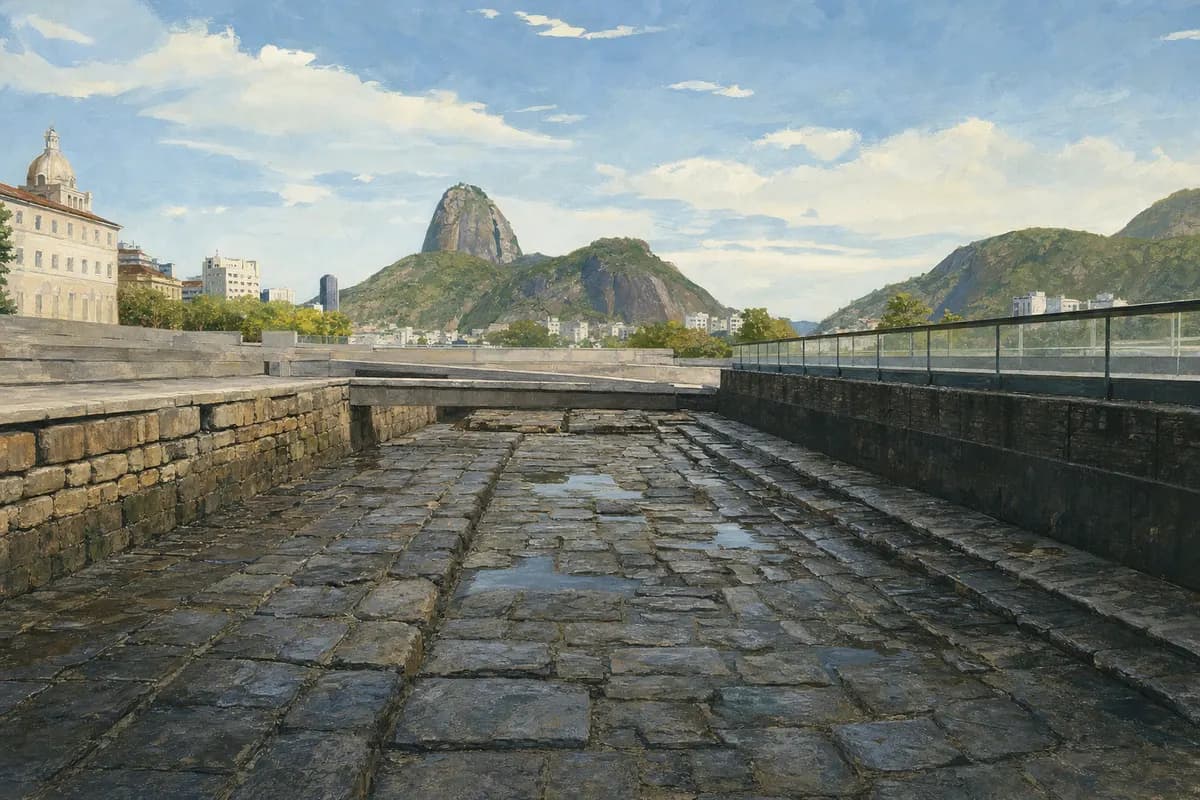
- What Was the Valongo Wharf in Rio de Janeiro?O Cais do ValongoHow enslaved Africans were landed, counted, held and sold at the Valongo in Rio de Janeiro from 1774 to 1831, and how its wharf was found again in 2011.B1 9 min Audio
Life under slavery
What the law allowed, how long people lived, and the men paid to bring back those who escaped.
- What Did the Law Say About Punishing Enslaved People?Os castigos e a leiWhat a pelourinho was, who could punish an enslaved person in Brazil, and what the law said and did not say from 1824 to 1886.B1 9 min Audio
- How Long Did Enslaved People Live in Brazil?Quanto tempo viviamWhat the 1872 census and one study tell us about how long enslaved people lived in Brazil, and why "seven years" is not a proven fact.B1 9 min Audio
- Who Was the Capitão do Mato?O capitão do matoWho the capitães do mato were, how they were paid, and what the 1722 rules of Minas Gerais say about them.B1 9 min Audio
Quilombos and resistance
The communities formed by people who escaped, Palmares, the largest of them, and Zumbi, its last leader.
- What Was a Quilombo?O que era um quilomboWhat a quilombo was, where the words quilombo and mocambo come from, how Lisbon defined one in 1740, and what the word means in Brazil today.B1 7 min Audio
- What Was Palmares, Brazil's Largest Quilombo?Os mocambos de PalmaresWhat Palmares was, where its name comes from, and what a soldiers' diary of 1645 and other documents tell us about how people lived there.B1 10 min Audio
- What Was the 1678 Peace Agreement with Palmares?O acordo de 1678What the paper of 1678 promised the people of Palmares, who went to Cucaú and who stayed, and how the peace ended in less than two years.B1 9 min Audio
- Who Was Zumbi dos Palmares?Zumbi dos PalmaresWho Zumbi was, how Palmares resisted for almost a century, how its centre was destroyed in 1694, and what a letter of 1696 tells of his death.B1 9 min Audio
Freedom, and what remains
How a person could become free before slavery ended, and the religions that came from Africa and took a new form in Brazil.
- How Could an Enslaved Person Become Free in Brazil?A carta de alforriaWhat a carta de alforria was, how an enslaved person in Brazil could become free, and what the law said before and after 1871.B1 7 min Audio
- What Is Candomblé?Candomblé, vodu e santeriaWhat candomblé is, how African religions took a new form in Brazil, Haiti and Cuba, and why an old terreiro in Salvador is now protected.B1 8 min Audio
The expeditions from São Paulo
The bandeiras: expeditions that left São Paulo for the interior in the seventeenth century, above all to capture Indigenous people and force them to work.
- What Was the 'Red Gold' of Colonial Brazil?O ouro vermelhoWhere the words "red gold" come from, and how expeditions from São Paulo captured Indigenous people in the 1600s and forced them to work.B1 9 min Audio
- What Were the Bandeiras?As bandeirasWhat the bandeiras of São Paulo were, what they went into the interior to get, and how their men came to be shown as heroes centuries later.B1 9 min Audio
- Who Was Fernão Dias Pais?Fernão Dias PaisWho Fernão Dias Pais was, what his expedition of 1674 to 1681 did, and which stories about him come from documents and which are only told.B1 9 min Audio
The gold of Minas Gerais
Gold was found in the 1690s. Who went to the mines, who was taken there by force, how the gold was dug, and the war and the road that followed.
- Who Found the First Gold in Minas Gerais?O primeiro ouro de MinasWhat is known about the first gold of Minas Gerais in the 1690s, who tells the best-known story about it, and where the name Ouro Preto comes from.B1 9 min Audio
- Who Went to Brazil's Gold Rush?A corrida do ouroWho went to the gold mines of Minas Gerais after the 1690s, where they came from, and who was taken there by force.B1 9 min Audio
- What Was the War of the Emboabas?A Guerra dos EmboabasWho fought the War of the Emboabas in Brazil's gold mines in 1708 and 1709, what they fought over, and what the king did afterwards.B1 9 min Audio
- What Was the Caminho Novo?O Caminho NovoHow a direct road from Rio de Janeiro to the gold mines began to be opened around 1700: who proposed it, who did the work and who gained from it.B1 9 min Audio
- How Was Gold Mined in Colonial Brazil?O ouro dos riosHow gold was washed from the rivers of Minas Gerais with a bateia, who did that work, how the king's rules shared out the land, and what a surgeon wrote of it.B1 9 min Audio
- How Many Enslaved People Were in Minas Gerais?Escravizados nas minasWhat the tax lists of Minas Gerais in the 1700s count and leave out, and what words like "mina" and "angola" say about where enslaved people were taken from.B1 9 min Audio
The king's fifth, and where the gold went
The quinto, the tax that gave the king of Portugal one part in five, the ways it was collected, and what became of the gold after Lisbon.
- What Was the Quinto, Brazil's Royal Fifth?O quinto do reiHow the king of Portugal took a fifth of the gold of Minas Gerais: the quinto, the smelting houses, and the revolt of 1720 in Vila Rica.B1 9 min Audio
- What Were the Capitação and the Derrama?A capitação e a derramaHow the king of Portugal taxed the gold of Minas Gerais from 1735: the capitação, the hundred arrobas a year, and the derrama, and who paid each.B1 9 min Audio
- Where Did Brazil's Gold Go?O destino do ouroWho dug the gold of Minas Gerais in the 1700s, how it reached Lisbon, what historians say about Mafra, and where most of the registered gold went.B1 9 min Audio
Freed people, churches and art in Minas
How people bought their freedom in instalments, why the churches of Minas were built by brotherhoods, and what is known of the sculptor called Aleijadinho.
- How Did Enslaved People Buy Freedom in Minas?Os libertos de MinasHow enslaved people in Minas Gerais paid for their freedom in instalments in the 1700s, and what limits freed people still met.B1 9 min Audio
- Why Did the Baroque Flourish in Minas Gerais?O barroco em MinasWhy Minas Gerais had no convents, who had its gilded churches built and paid for them, and what scholars say about the Baroque there.B1 9 min Audio
- Who Was Aleijadinho?Quem foi AleijadinhoWho Antônio Francisco Lisboa, known as Aleijadinho, was: what documents of his lifetime show, and what comes from a biography of 1858.B1 9 min Audio
Revolts against taxes, governors and companies
Four times between 1660 and 1720 colonists rose against a tax, a governor or a trading company, and not against the king: in Rio de Janeiro, the Maranhão, Pernambuco and Vila Rica.
- What Was the Cachaça Revolt?A Revolta da CachaçaThe revolt of 1660 in Rio de Janeiro against a governor and his tax to pay the city's soldiers, and what cachaça had to do with it.B1 9 min Audio
- What Was the Beckman Revolt?A Revolta de BeckmanHow settlers in São Luís, in the Maranhão, rose in 1684 against a trade monopoly and the Jesuits, how it ended, and who their "people" were.B1 9 min Audio
- What Was the War of the Mascates?A Guerra dos MascatesWhy Olinda and Recife fought in 1710 and 1711 over a stone column, who fought on each side, and how the quarrel got its name.B1 9 min Audio
- Who Was Filipe dos Santos?Vila Rica, 1720The Vila Rica revolt of 1720 against the Casas de Fundição, and what the papers say, and do not say, about Filipe dos Santos and his death.B1 9 min Audio
The Minas Conspiracy and Tiradentes
The secret plan of 1788 and 1789 to separate Minas Gerais from Portugal, told from the trial papers: its causes, the men, the denunciation, who Tiradentes was, and how he came to be the only one hanged.
- What Caused the Inconfidência Mineira?As causas da InconfidênciaWhat stood behind the secret plan of 1788–89 in Minas Gerais: a minister's orders on the gold tax, debts to the government and the example of the United States.B1 9 min Audio
- Who Were the Inconfidentes of Minas Gerais?Os homens da InconfidênciaWho the men accused in the secret plan of 1788–89 in Minas Gerais were, what the trial record says they planned, and whose liberty was in question.B1 9 min Audio
- Who Denounced the Inconfidência Mineira?A denúncia da InconfidênciaWho Joaquim Silvério dos Reis was, what his letter of 1789 to the governor of Minas Gerais says, and what followed for him and for the men of the plan.B1 9 min Audio
- Who Was Tiradentes?Quem foi TiradentesWho Joaquim José da Silva Xavier was, by the papers of his time: his answers to the judges, his baptism record and the lists of his goods.B1 9 min Audio
- Why Was Tiradentes Executed?A execução de TiradentesWhat the sentence of 1792 ordered for Tiradentes, why the queen's letter spared ten other men and not him, and how Brazil remembers him today.B1 9 min Audio
Salvador, 1798: the Bahia Conspiracy
Handwritten papers on the walls of Salvador called for a republic and for equality. What they said, who was accused, and how soldiers and tailors were punished hardest.
- What Was the Bahia Conspiracy of 1798?Os papéis de SalvadorWhat the handwritten papers found in Salvador in 1798 asked for, how the governor looked for their writer, and what they do and do not say about slavery.B1 9 min Audio
- How Did the Bahia Conspiracy of 1798 End?O fim da Conjuração BaianaWho the four men hanged in Salvador in 1799 were, what the two sentences ordered for the other prisoners, and how a law of 2011 names the four.B1 9 min Audio
What the series covers
The series begins with slavery in Brazil, from the sixteenth century to 1888: the trade, life under it, the people who resisted, and what remains today. Then the gold of Minas Gerais in the eighteenth century: the expeditions from São Paulo, the rush, the king's fifth, and the towns and churches the gold paid for. Then the colonial revolts and conspiracies, from Rio de Janeiro in 1660 to Salvador in 1798, with the Minas Conspiracy and Tiradentes between them. Independence, the Empire and the Republic follow.
How the texts are written
Every text is written for learners from historians' work and documents of the time, and its facts are checked against those sources by independent readers. The sources are listed at the end of each text. Where historians disagree, or the documents do not say, the text says so.
Questions about Brazil's history
Short answers, with the text that tells each one in full.
When was slavery abolished in Brazil?
In 1888, by a law of 13 May known as the Lei Áurea. Brazil was the last country in the Americas to end it. The trade that brought enslaved Africans had been forbidden by a Brazilian law of 1831 and went on illegally until 1850, and ending the trade freed no one who was already enslaved. The slave trade to Brazil tells how it grew and how it ended.
How many enslaved Africans were brought to Brazil?
Almost five million between the sixteenth and nineteenth centuries, by the estimates of the SlaveVoyages database: more than a third of all the people landed in the Americas. About one person in ten put on a ship for Brazil died at sea. The Atlantic crossing and the Valongo Wharf follow the journey.
What was a quilombo?
A community formed by people who had escaped from slavery. There were hundreds in every region of colonial Brazil, at first called mocambos; both words come from Kimbundu, a language of Angola. Today the word also names rural Black communities descended from them, whose right to their land is in the Constitution of 1988. What was a quilombo?
Who was Zumbi dos Palmares?
The last leader of Palmares, the largest quilombo in Brazil, which lasted almost a century in what is now Alagoas. Colonial troops destroyed its centre in 1694; Zumbi was found and killed on 20 November 1695. Since 2024 that day is a national holiday, the Day of Zumbi and of Black Consciousness. Who was Zumbi dos Palmares?
What were the bandeiras?
Expeditions that left São Paulo for the interior, mostly in the seventeenth century, on foot, for months or years. Before anything else they went to capture Indigenous people, who were taken to São Paulo and forced to work; they also looked for gold and silver. The picture of the bandeirante as a hero was made much later, between about 1890 and the 1930s. What were the bandeiras?
What was the quinto in colonial Brazil?
The king of Portugal's share of the gold: one part in every five taken from the ground. The rule stayed the same and the way of collecting it changed several times, ending in the Casas de Fundição, where gold dust was melted into stamped bars and the fifth was taken out. What was the quinto? and where the gold went tell the rest.
Who was Aleijadinho?
Antônio Francisco Lisboa, a sculptor of Minas Gerais who died in 1814. Receipts he signed and his death record survive from his own lifetime; the twelve stone prophets at Congonhas, made between 1800 and 1805, are his and his workshop's work. Almost everything else told about his life comes from a biography published in 1858, forty-four years after he died. Who was Aleijadinho?
Who was Tiradentes?
Joaquim José da Silva Xavier, a low-ranking cavalry officer of Minas Gerais who also pulled teeth, which gave him his nickname. He was one of the men of the Minas Conspiracy and the only one hanged, in Rio de Janeiro on 21 April 1792; that day is a national holiday in Brazil. No portrait was made in his lifetime: the bearded image dates from the 1890s. Who was Tiradentes? and why he was executed.
What was the Inconfidência Mineira?
A secret plan of 1788 and 1789 to separate Minas Gerais from Portugal. It was denounced to the governor before anything was done, so there was no revolt. In 1792 the judges condemned eleven men to death; a letter of the queen, written in 1790, changed ten of those sentences to exile in Africa. The name, which meant disloyalty to the Crown, was the Portuguese government's. What caused it and who the men were.
What level of Portuguese do I need to read these?
Intermediate, B1: sentences of up to about twenty words, in the tenses you meet first, with every historical term explained in the text itself. Each text is read aloud and has the English beside it line by line, so an A2 reader can follow with help. If you are not sure of your level, the free level test takes ten minutes, and the reading library has easier stories from A1.
Are the texts accurate?
Each one is written from a sheet of facts drawn from historians' articles and documents of the time, and then read by independent checkers who mark any sentence that goes further than its source. The sources are listed at the end of each text. They are short texts for learners, not a full history: where historians disagree or the documents are silent, the text says so instead of choosing.
Can I listen as well as read?
Yes. Every text has a recording of eight to ten minutes that highlights each word as it is spoken, free and with no account. Open a text in the Reader to tap any word for its meaning in that sentence and save it for review.
Why learn Portuguese through history?
Because the words come with a reason to remember them. Quilombo, alforria, senhor de engenho, Consciência Negra: these are in Brazilian newspapers, songs and street names today, and a text that explains where they come from teaches the language and the country together.
Looking for something easier? Stories and legends in Brazilian Portuguese from A1, each with audio. Or check where you stand with the free level test.