Ser vs Estar: What’s the Difference?
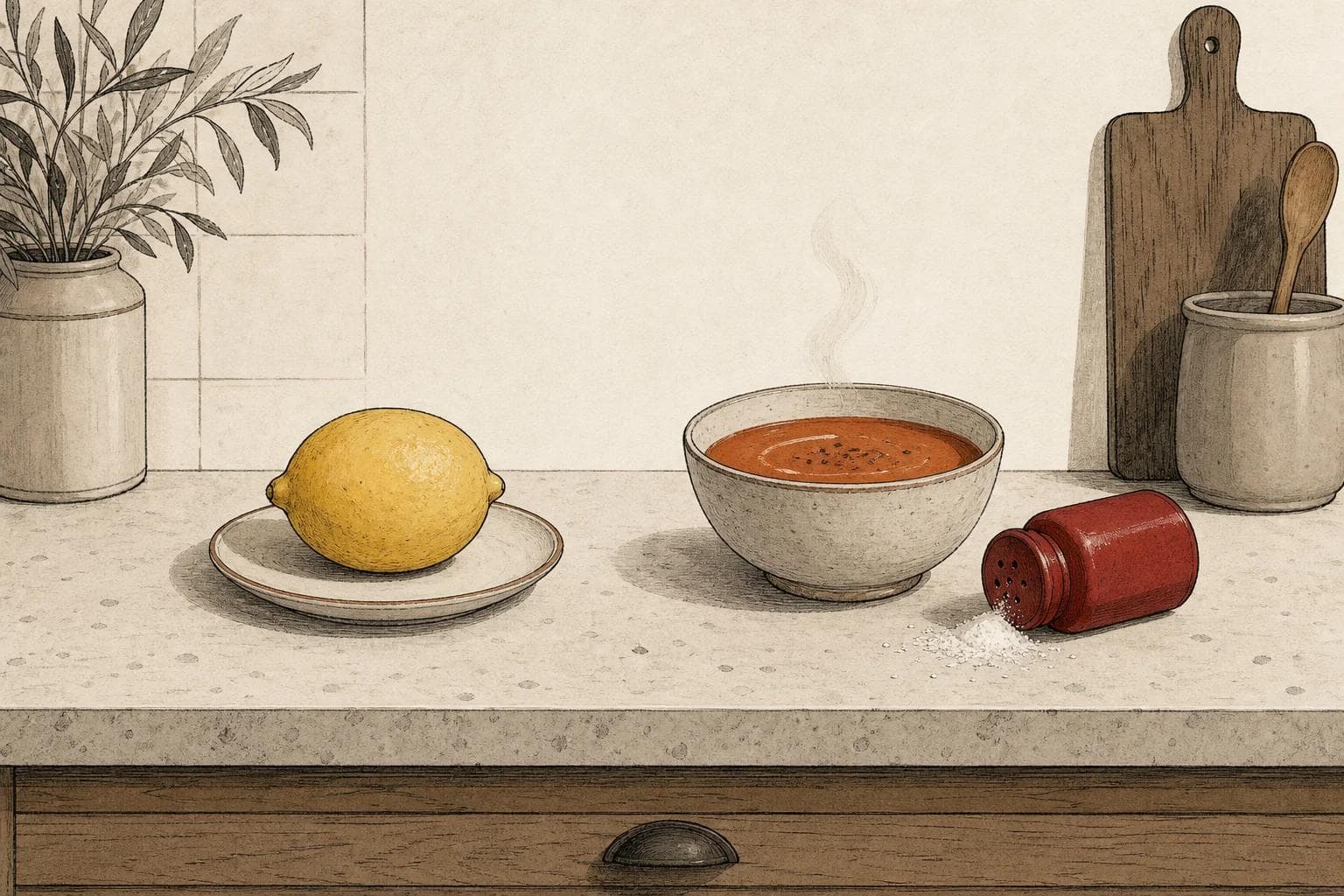
Ser and estar both mean “to be”, and with an adjective the choice changes the meaning. A sopa é salgada or está salgada? Here’s how to tell.
 Samuel Virgo
In Portuguese, both ser and estar mean “to be”, but you can’t swap one for the other. There are:
- situations where you must use ser,
- situations where you must use estar,
- and situations where you can use either verb — but the choice changes the meaning of the sentence.
This lesson is about the third case.
When can you use both ser and estar?
When ser or estar is followed by an adjective, you can often use either verb. But the verb you choose changes what the sentence means.
1. General characteristics vs particular conditions
We use ser + adjective to say what someone or something is like in general:
- A água do mar é salgada.Seawater is salty.
- O limão é azedo.Lemons are sour.
- Einstein é inteligente.Einstein is intelligent.
Being salty is what seawater is like. Lemons are sour in general. Einstein is an intelligent person.
Now compare these, with estar + adjective:
- A sopa está salgada.The soup is too salty.
- O leite está azedo.The milk has gone sour.
- Hoje estou cansado.I’m tired today.
Here we’re talking about one particular situation: this soup has too much salt, this milk has gone off, and the person is tired today.
The key difference: ser says what someone or something is like in general; estar describes a particular condition or state.
2. Characteristics vs conditions that result from an action
Another useful test: does the adjective describe something the person or thing simply is, or a condition that something caused?
- O vestido é novo.The dress is new.
- Ela é loira.She’s blonde.
- Ele é inteligente.He’s intelligent.
Being new, blonde or intelligent is a characteristic — no particular action made it so.
Now compare these, with estar + adjective:
- O vestido está rasgado.The dress is torn.
- Hoje estou cansado.I’m tired today.
Here the condition is the result of something that happened: someone tore the dress, and the person is tired because they’ve worked hard.
The key difference: ser describes a characteristic that no particular action caused; estar can describe a condition that results from something that happened.
Practice
Type the right form of ser or estar in each blank, then press Check. Once a sentence is right, you can listen to it.
Exercise 1: Ser or estar?
Complete with the right form of ser or estar.
- 1.O quadro da sala limpo.
- 2.O pai em casa.
- 3.Os prédios altos.
- 4.O banco fechado.
- 5.Meus primos do Norte do Brasil.
- 6.A caneta em cima da mesa.
- 7.Nosso professor muito simpático.
- 8.Eu cansada.
- 9.O João Alfredo doente.
- 10.Eles no restaurante.
- 11.Ela não atrasada.
- 12.O Pedro um rapaz muito inteligente.
- 13.A sopa boa, mas fria.
- 14.Minha casa grande.
- 15.A Ana e o João na Inglaterra.
Exercise 2: Make sentences
Make a sentence from the words in brackets with ser or estar. Where you see não, write it before the verb.
- 1.(nós / não / em casa à noite)
Nós em casa à noite. - 2.(eu / cansada)
Eu cansada. - 3.(minha mulher / professora)
Minha mulher professora. - 4.(o João / com fome)
O João com fome. - 5.(você / atrasado)
Você atrasado. - 6.(esta sala / muito escura)
Esta sala muito escura. - 7.(eu / não / com sede)
Eu com sede. - 8.(ela / de Curitiba)
Ela de Curitiba. - 9.(de manhã / muito frio)
De manhã muito frio. - 10.(a Tereza / no estrangeiro)
A Tereza no estrangeiro. - 11.(as canetas / em cima da mesa)
As canetas em cima da mesa. - 12.(os bolos de chocolate / sempre / muito doces)
Os bolos de chocolate sempre muito doces.
Exercise 3: One of each
Make two sentences: one with ser for what it’s like, one with estar for how it is now.
- 1.(a janela / larga // fechada)
A janela larga.
A janela fechada. - 2.(o quadro / muito interessante // na parede)
O quadro muito interessante.
O quadro na parede. - 3.(as mesas / grandes // sujas)
As mesas grandes.
As mesas sujas. - 4.(o supermercado / grande // aberto)
O supermercado grande.
O supermercado aberto. - 5.(o empregado / simpático // cansado)
O empregado simpático.
O empregado cansado. - 6.(ele / inteligente // contente)
Ele inteligente.
Ele contente.
Learn Portuguese by using it.
New reading guides, useful Portuguese resources, and notes on learning Brazilian Portuguese — delivered occasionally.
Related articles

Ser, Ir, Estar and Ter in the Past
Fui, estive, tive: the pretérito perfeito of ser, ir, estar and ter, why ser and ir look the same, and when to use each, with audio and exercises.
Samuel Virgo1 min read
Regular -ar, -er and -ir Verbs in the Past
Falei, comi, abri: how to form the pretérito perfeito of regular -ar, -er and -ir verbs, the spelling changes to watch, with audio and exercises.
Samuel Virgo1 min read
Irregular Verbs in the Past Tense
Fiz, disse, trouxe, vim, pude, saí: the pretérito perfeito of the most common irregular Portuguese verbs and the -air verbs, with audio and exercises.
Samuel Virgo1 min read